The Ultimate Toronto Transit Guide for New Residents
Moving to Toronto is exciting, but figuring out how to get around can feel overwhelming in the first few weeks. The good news is that Toronto has one of the most extensive public transit systems in North America. The not-so-good news is that nobody really explains how it all fits together. Consider this your plain-language guide to navigating the city without a car -- written by someone who has been riding the TTC since the tokens were brass.
The TTC: Toronto's Transit Backbone
The Toronto Transit Commission runs the subway, streetcars, and buses that serve the city proper. It is one unified system with a single fare, which means a subway-to-bus transfer does not cost extra as long as you are using PRESTO (more on that in a moment).
The Subway
Toronto's subway has four lines, though two of them do most of the heavy lifting:
Line 1 (Yonge-University) runs in a giant U-shape from Finch station in the north down Yonge Street through downtown, then back up along University Avenue and through the west side of midtown. This is the line you will use most often. Key stops include Bloor-Yonge (the main transfer point), Union Station (the transit hub of the entire city), Queen and Dundas (downtown core), and St. George (connection to Line 2).
Line 2 (Bloor-Danforth) runs east-west along Bloor Street and Danforth Avenue, from Kipling in the west to Kennedy in the east. This line connects you to neighbourhoods like the Annex, Greektown, and the junction points for Scarborough.
Line 3 (Scarborough) was a short elevated line connecting Kennedy station to Scarborough Town Centre. It closed permanently in November 2023 and has been demolished. The route is being replaced by the Scarborough Subway Extension, which will extend Line 2 further into Scarborough with a new underground station at Scarborough Centre.
Line 4 (Sheppard) runs a short stretch along Sheppard Avenue East from Sheppard-Yonge to Don Mills. It is useful if you live or work in that corridor, but most residents rarely use it otherwise.
Subway service generally runs from about 6:00 a.m. (8:00 a.m. on Sundays) until roughly 1:30 a.m. Trains come every three to five minutes during rush hour and every five to ten minutes at other times.
Streetcars
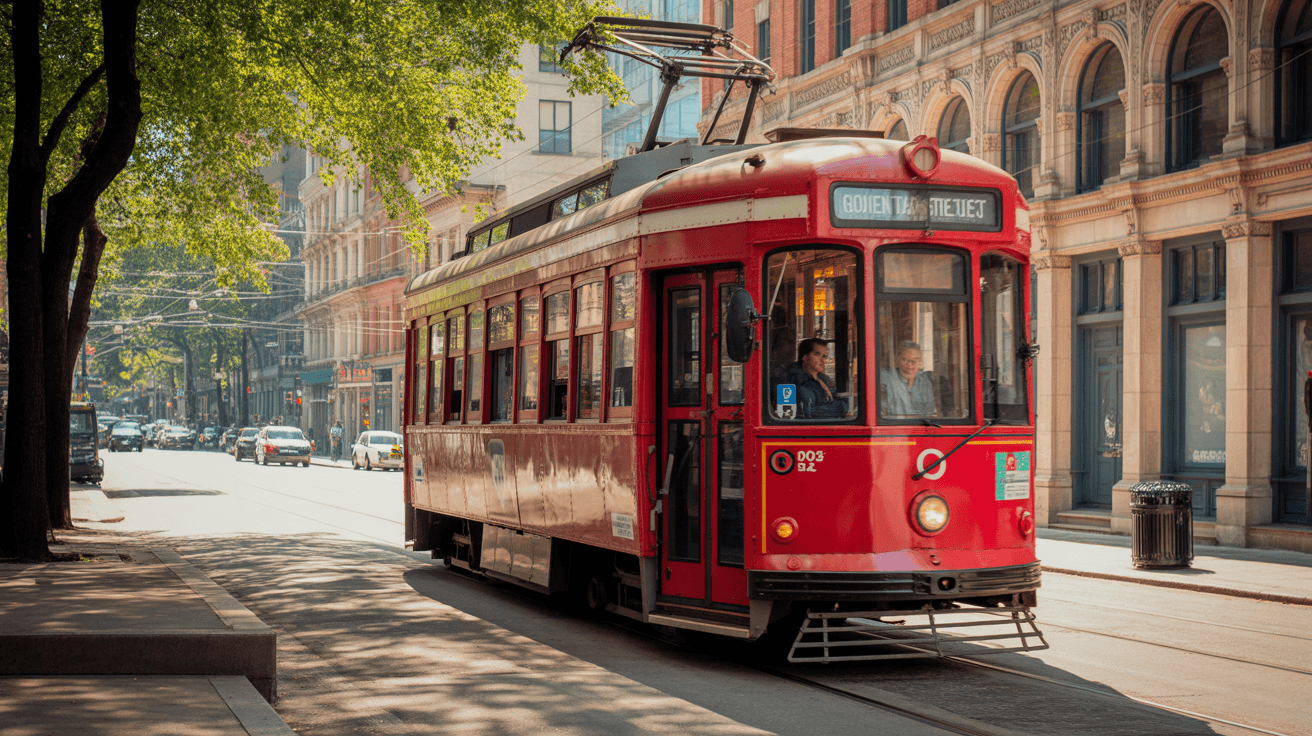
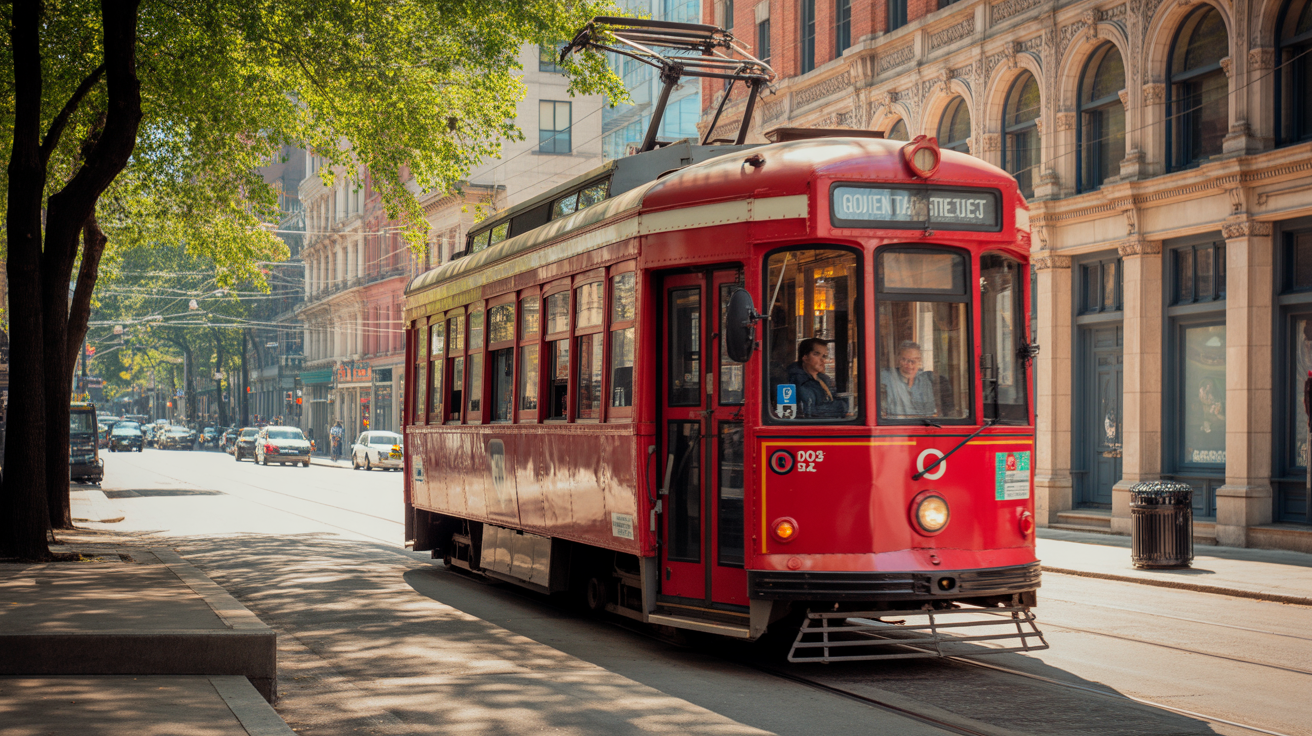
Toronto's streetcars are iconic, and they are a genuinely pleasant way to travel. The newer Flexity models are long, low-floor vehicles with air conditioning and digital displays. Streetcar routes run primarily in the downtown core along major streets: King, Queen, Dundas, College/Carlton, Spadina, and Bathurst, among others.
A few tips that will save you confusion:
- The 501 Queen is the longest streetcar route in the city, running from Long Branch in the west to Neville Park in the east. It can be slow, but riding it end to end is a wonderful way to see the city.
- The 504 King is your best bet for getting across downtown quickly, especially since the King Street Transit Priority corridor was introduced. Cars are restricted from through-travel on King, so the streetcar moves much faster now.
- Spadina (510) and Bathurst (511) run north-south and connect to the subway at Spadina and Bathurst stations respectively.
Streetcars run in mixed traffic on some routes, which means delays happen. Build in a few extra minutes if you are heading somewhere time-sensitive.
Buses
TTC buses fill in the gaps where subway and streetcar lines do not reach. In the inner suburbs -- North York, Scarborough, Etobicoke -- buses are often the primary transit option. Routes are numbered and generally run along major roads in a grid pattern. Some key routes to know:
- Dufferin (29) and Ossington (63) are busy north-south routes on the west side.
- Lawrence East (54) and Eglinton East (34) serve the eastern parts of the city.
- Blue Night Network: After the subway closes, select bus and streetcar routes run all night (marked with a "3" prefix, like the 300 Bloor-Danforth). These run roughly every 30 minutes and are a lifeline if you are coming home late.
PRESTO: Your Key to the System
PRESTO is the reloadable smart card that works across the TTC, GO Transit, MiWay (Mississauga), YRT/Viva (York Region), and other regional systems. You need one. Here is what to know:
- Get your card at any subway station, Shoppers Drug Mart, or order one online. There is a small fee for the card itself.
- Tap on every ride. On the subway, tap at the fare gates. On streetcars and buses, tap the reader near the door. The system handles transfers automatically -- if you tap onto a second vehicle within two hours, you will not be charged again.
- Load funds online or at a station. You can set up auto-reload so you never run out of fare.
- Monthly passes are available and make sense if you ride regularly. There are also discounted fares for seniors, students, and youth.
A single adult TTC fare covers your entire trip, regardless of how many transfers you make, as long as you complete the journey within the two-hour window.
GO Transit: Getting Around the GTA
If you live in the suburbs and work downtown -- or vice versa -- GO Transit is your commuter rail and bus network. GO trains radiate outward from Union Station along seven corridors: Lakeshore West, Lakeshore East, Kitchener, Barrie, Richmond Hill, Stouffville, and Milton.
GO fares are distance-based and separate from TTC fares, though there is a co-fare discount when you transfer between GO and TTC using the same PRESTO card. The Lakeshore lines run the most frequently, with service every 15 to 30 minutes during peak hours.
GO trains are comfortable, have Wi-Fi, and are generally quite reliable. If you are commuting from places like Oakville, Oshawa, or Barrie, the GO train will become your best friend. Many people read, work on laptops, or nap on their commute -- it is a very different experience from driving the 401.
UP Express: Airport Connection
The Union Pearson Express (UP Express or UPX) runs between Union Station and Toronto Pearson International Airport in about 25 minutes. Trains depart every 15 minutes, and you can pay with PRESTO. It is fast, clean, and dramatically less stressful than taking a taxi or rideshare during rush hour. If you have visitors flying in, tell them about the UP Express -- it is one of the best airport connections in North America.
Cycling and Bike Share
Toronto's cycling infrastructure has expanded significantly. Dedicated bike lanes run along Bloor, Richmond, Adelaide, and many other streets. Bike Share Toronto has stations across the downtown core and inner neighbourhoods -- you can grab a bike, ride to your destination, and dock it at another station. It is perfect for short trips and connecting between transit stops.
If you plan to cycle regularly, invest in a good lock (bike theft is a real issue), lights for night riding, and familiarize yourself with the city's network of trails and bike lanes.
Best Transit-Connected Neighbourhoods
If reliable transit access is a priority (and in Toronto, it should be), these neighbourhoods consistently rank well:
- The Annex / Bloor West: Steps from Line 1 and Line 2, plus streetcar access on Spadina and Bathurst.
- Yonge and Eglinton: Line 1 subway and the Eglinton Crosstown LRT (Line 5) when fully operational.
- Danforth / Greektown: Line 2 subway with excellent bus connections heading north.
- Liberty Village: The Exhibition GO station and the 504 King streetcar connect you to downtown and Union Station.
- North York Centre: Line 1 subway at Sheppard-Yonge and North York Centre stations, plus connections to Line 4.
- Queen West / Ossington: The 501 Queen streetcar and easy access to Ossington station on Line 2.
Practical Tips for New Riders
- Rush hour is real. Between 7:30 and 9:30 a.m. and 4:30 and 6:30 p.m., the subway and major streetcar routes are packed. If you can shift your schedule by even 30 minutes, your commute will improve dramatically.
- Stand right, walk left. On escalators, stand on the right side and keep the left clear for people walking up. Torontonians take this seriously.
- Let people off first. Wait beside the subway doors and let passengers exit before boarding. It sounds obvious, but you would be surprised.
- Check alerts before you leave. The TTC posts service alerts on their website and app. A quick check can save you from heading to a station that is closed for maintenance.
- Winter changes things. Snow and ice slow down surface routes. Streetcars can be delayed by stuck vehicles or frozen switches. In winter, the subway is your most reliable option.
- Download the transit app. Apps like Transit or Google Maps provide real-time arrival predictions that are reasonably accurate. They will show you the fastest combination of routes for any trip.
Toronto is a city that rewards those who learn its transit system. Once you know which routes to take, which connections to make, and which times to avoid, you will find that getting around without a car is not just possible -- it is often the better choice. Welcome to the city. Tap your PRESTO and enjoy the ride.